Crucifer: When Your Design Demands a Solemn Authority
There is a specific type of project that requires more than just a typeface; it requires an atmosphere. You know the feeling when you look at an album cover for a doom metal band, the title card of a dark fantasy video game, or the logo for a high-end, edgy streetwear brand? It is a visual language that speaks of weight, history, and a bit of mystery. This is the territory of blackletter typography, but finding a font that balances that ancient aesthetic with modern usability can be a challenge. Many script or gothic fonts feel too dated or illegible. Enter Crucifer. It is not merely a collection of letters; it is a design asset forged at the intersection of faith and shadow, offering a powerful, ritual-driven presence for creators who aren't afraid of the dark side of design.
The Anatomy of Dark Devotion
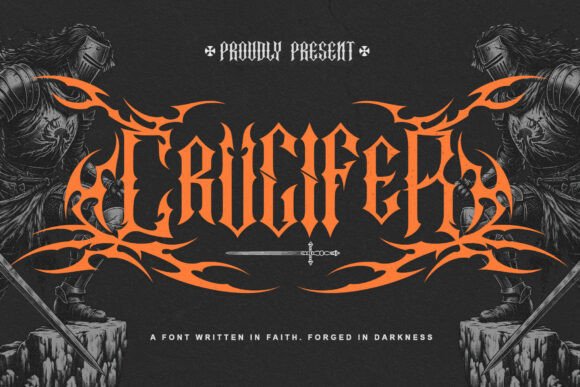
To understand why Crucifer works so well for specific branding, you have to look at its construction. This is a display font that feels carved in iron rather than written in ink. The strokes are razor-sharp, and the letterforms are towering, drawing an undeniable visual lineage from ancient cathedral architecture and forbidden manuscripts. However, unlike some heavy metal fonts that can look jagged and messy, Crucifer maintains a solemn authority. It treats every letter as a symbol of dark devotion. For graphic designers and brand strategists, this level of personality is invaluable. When you are building a brand identity for a client who wants to convey strength, tradition, or a rebellious edge, a standard sans serif font simply will not cut it. You need a typeface that commands attention with unapologetic intensity.
The visual appeal of this premium font lies in its ability to be aggressive yet sophisticated. In the world of modern typography, we often talk about "voice." A script font might whisper, and a sans serif might speak clearly, but Crucifer chants. This makes it an essential addition to your library of design assets if you specialize in editorial design, poster design, or merchandise creation.
Practical Applications: Beyond the Album Cover
While the description of Crucifer immediately brings to mind album covers and band logos—and it excels there—its utility extends far beyond the music industry. As a creative font, it offers a unique solution for various commercial projects that need to stand out in a crowded market. If you are a small business owner looking to carve out a niche, using a distinctive typeface like this can be a game-changer.
Consider the craft beverage industry. A craft brewery or a distillery often looks for packaging design that reflects heritage and craftsmanship. Crucifer works beautifully on bottle labels, particularly for dark stouts, spiced rums, or small-batch spirits. It gives the product an immediate sense of quality and tradition. Similarly, in the realm of tattoo design, artists often struggle to find fonts that look organic on skin. The flowing yet sharp nature of this typeface mimics the movement of a tattoo gun, making it perfect for flash sheets or digital portfolios.
For content creators and social media managers, the challenge is always grabbing attention in a fraction of a second. Using Crucifer for headlines on Instagram stories or YouTube thumbnails can create an instant hook. It signals to the audience that the content is serious, intense, or deals with heavy themes. It is also an excellent choice for wedding invitations or event stationery that leans into a "Gothic Romance" or "Masquerade" theme, proving that blackletter fonts can be elegant as well as edgy.
Strategic Typography and Brand Recognition
From a marketing perspective, typography is one of the fastest ways to communicate brand values. When you choose a font like Crucifer, you are making a strategic decision to align your brand with concepts of resilience, mystery, and depth. This is particularly useful for entrepreneurs in the digital product space, such as creators of horror games, dark fantasy novels, or even cybersecurity firms that want to project an image of impenetrability.
Visual consistency is the backbone of brand recognition. By utilizing Crucifer across your logo design, headers, and marketing assets, you create a cohesive visual identity that your audience will learn to recognize instantly. However, a word of advice on readability: because this is a display font with intricate detailing, it is best used for headlines, sub-headers, and logos rather than body copy. For long-form text, pairing it with a clean, modern serif font or a legible sans serif font is crucial. This contrast not only makes the text easier to read but also makes the blackletter headers pop even more by comparison.
Mastering the Pairing and Licensing
One of the most common questions designers have about specialized typefaces is how to pair them. You want to avoid a visual clash. Because Crucifer has such a strong personality, it pairs best with fonts that are neutral and understated. Think of a geometric sans serif or a transitional serif font. This allows Crucifer to be the "voice" of the design while the secondary font provides the supporting information. Testing these pairings is a step you cannot skip. Mock up your designs—whether it is a website header, a poster, or a merchandise mockup—to ensure the hierarchy is clear. The goal is to guide the viewer's eye, using the intensity of Crucifer for the points of highest importance.
Before you finalize any project, especially for commercial use, always review the licensing terms of your design assets. Ensuring you have the correct commercial license for a font protects both you and your client. It is a small administrative step that maintains the professionalism of your workflow. Crucifer is designed to be a tool for serious creatives, and using it within the proper legal framework is part of that professional presentation.
Ultimately, typography is about evoking emotion. If your project requires a voice that is bold, historical, and unapologetically intense, Crucifer provides the perfect medium. It transforms standard text into a visual ritual, ensuring your message is not just read, but felt.