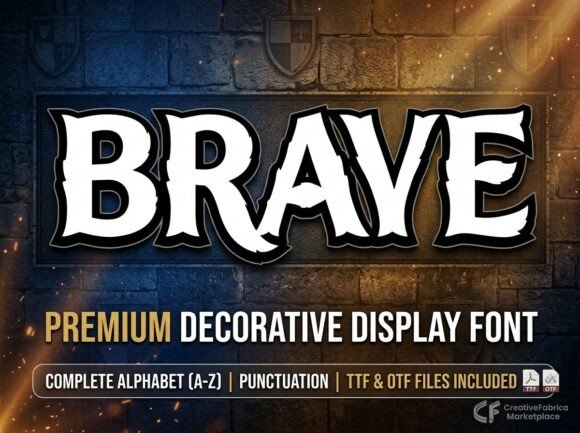
Brave: The Display Typeface That Commands Attention
Some fonts whisper; they politely suggest a mood and step aside to let the content shine. But what happens when the typography itself is the event? In a landscape saturated with safe, functional sans-serifs, there is a distinct category of typeface designed not just to be read, but to be witnessed. If you are building a brand identity that refuses to fade into the background, or creating marketing assets that demand a second glance, your typography needs to possess a specific kind of charisma. It needs to be brave. Enter Brave, an avant-garde decorative display font engineered to be the absolute focal point of any composition.
This isn't your everyday workhorse typeface for body copy. It is a specialized tool for high-impact moments. Characterized by its commanding visual personality and unique artistic flourishes, this typeface was crafted for creators who refuse to blend in. While it carries a strong, artistic soul, Brave maintains a high-end, polished finish. This duality makes it a versatile asset, equally at home on luxury packaging as it is on experimental editorial layouts. It strikes a balance that few decorative fonts achieve: it is loud and expressive, yet sophisticated enough for high-stakes commercial applications.
The Power of the "All-Caps" Statement
One of the defining characteristics of Brave is its structure. It is an All-Caps (Uppercase Only) display typeface. For those unfamiliar with typographic design choices, this might seem like a limitation, but it is actually a deliberate feature that maximizes visual impact. By omitting lowercase characters, the design focuses entirely on the intricate craftsmanship of every individual letter. In display fonts, lowercase letters often create an uneven visual baseline (think of the tails of 'g' or 'y'), whereas uppercase letters create a solid, rectangular block of visual weight.
Because each letter acts as a standalone work of art, the "All-Caps" approach ensures uniformity and strength. When you set a headline in Brave, you aren't just typing words; you are constructing a monument. This is particularly effective for logo design and branding, where the logotype needs to be instantly recognizable and structurally sound. The absence of lowercase characters forces the viewer to look at the shapes and forms of the letters themselves, appreciating the artistic flourishes and the unique geometry of the typeface.
Where Artistic Soul Meets Luxury Polish
Finding a premium font that balances creativity with professionalism can be difficult. Many "artistic" fonts look messy or unfinished, making them unsuitable for corporate or luxury applications. Conversely, many "polished" fonts lack the personality needed to stand out on social media or in editorial design. Brave bridges this gap.
The visual personality of this display font is commanding, but it doesn't scream for attention in a chaotic way. Instead, it draws the eye through elegant curves, bold weight, and distinct character shapes. This makes it an ideal choice for a variety of high-stakes projects:
- Conceptual Packaging: Imagine a high-end cosmetics box or a gourmet food label. Brave provides the necessary shelf presence to compete with established brands, suggesting quality and creativity before the customer even reads the ingredients.
- Editorial Layouts: In magazine spreads or blog headers, a modern typography choice like this can break the monotony of standard text. It sets the tone for the article—whether it’s avant-garde fashion, architecture, or modern art.
- Poster & Social Media Design: On platforms like Instagram or Pinterest, where users scroll rapidly, you have milliseconds to capture interest. A bold, decorative typeface stops the scroll. It creates a visual anchor that makes your graphics pop against the noise.
Practical Applications for Creators and Businesses
As a designer or business owner, your goal is to create a brand identity that resonates. Typography is the voice of your visual language, and choosing the right voice is critical. Here is how you can practically apply Brave to your upcoming projects to ensure they look professional and distinct.
1. Signature Logos and Wordmarks
A logo needs to be simple enough to remember but unique enough to own. Because Brave is a display font, it is perfect for the primary wordmark of a brand. If you are launching a boutique agency, a fashion label, or a creative consultancy, using Brave for your logo instantly communicates that you are bold and innovative. However, because it is so distinct, it is best to use it for the main brand name and pair it with a simpler font for the tagline.
2. High-Impact Headlines and Titles
Whether you are designing a website homepage or a printed brochure, the headline is the hook. Using Brave for your H1 headers ensures that the first thing a visitor sees is something memorable. It transforms a standard webpage into a curated experience. For example, if you are writing a blog post about "The Future of Interior Design," setting that title in Brave elevates the content from a simple article to a piece of editorial design.
3. Merchandise and Apparel
The apparel industry relies heavily on creative fonts. T-shirts, tote bags, and hats often feature typographic designs. Because Brave has a strong artistic soul and distinct flourishes, it translates beautifully to merchandise. The thick strokes and unique serifs (or lack thereof, depending on the specific weight) ensure that the text remains legible even when printed on fabric or viewed from a distance.
4. Digital Products and Course Materials
If you sell digital products—such as PDF guides, workbooks, or online courses—presentation matters. The cover of your PDF is your "packaging." Using a commercial font like Brave on your covers and section dividers gives your digital products a tangible, high-value feel. It signals to your customers that you have invested in quality tools to serve them.
Mastering Font Pairings: The Art of Balance
One of the most common mistakes in web design and graphic design is using two competing display fonts. This creates visual chaos. Because Brave has such a strong, commanding personality, it requires a partner that is willing to play a supporting role. This is where font pairing becomes essential.
To let Brave shine, you should pair it with a neutral, highly legible typeface for your body text. Here are a few practical recommendations:
- Pair with a Clean Sans Serif: A font like Montserrat, Roboto, or Open Sans provides a clean, modern backdrop. The simplicity of the sans serif highlights the artistic details of Brave without overwhelming the reader.
- Pair with a Classic Serif: If you want a more traditional or editorial look, pair Brave with a readable serif font like Georgia or Lora. This creates a high-contrast dynamic that feels very sophisticated and "magazine-like."
Readability Considerations: Always remember that Brave is a display font. It is engineered for short bursts of text—headlines, logos, and titles. Never use a decorative display font for long paragraphs or body copy. The eye needs a rest, and the brain processes simple shapes faster when reading long-form content. Use Brave to draw them in, and use a simple serif or sans serif to tell the story.
Technical Versatility: OTF and TTF Files
When investing in design assets, compatibility is key. You need a font that works seamlessly across different software and devices. Brave is delivered in two industry-standard formats to ensure you never hit a technical roadblock.
- OTF (OpenType Font): This is the industry standard for professional design software like Adobe Illustrator, Photoshop, and InDesign. OTF files often contain advanced layout features and kerning pairs that allow for more refined typesetting.
- TTF (TrueType Font): This format ensures universal compatibility. Whether you are working on a Mac, a PC, or uploading to a website builder, TTF files are recognized everywhere. This is particularly useful if you need to install the font on a server for web design or use it in software that doesn't support OTF.
Having both formats included means you are covered for professional print design (OTF) and general digital use (TTF). It ensures that your visual consistency is maintained whether you are printing a poster or creating a quick graphic in Canva.
Strategic Branding: When to Choose a Display Typeface
Choosing a font is a strategic decision, not just an aesthetic one. You should choose a creative font like Brave when your brand strategy relies on differentiation.
If you are in a crowded market—such as the coffee shop industry, boutique fashion, or creative consulting—you cannot afford to look generic. A generic font implies a generic service. By using a typeface with "unique artistic flourishes," you are visually communicating that your brand offers something custom, thoughtful, and high-end.
However, context is everything. If you are a law firm or a medical practice, a highly decorative avant-garde font might send the wrong signal. But for industries where aesthetics are the product—photography, interior design, event planning, luxury goods—Brave is the perfect tool to establish brand recognition. It helps you build a visual signature that clients will remember.
Final Thoughts on Execution
Typography is the clothing your words wear. You wouldn't wear a swimsuit to a board meeting, and you wouldn't wear a tuxedo to the beach. Similarly, you need to match your typography to your project goals. Brave is your "tuxedo" font—the one you bring out when you need to make a grand entrance.
When using this typeface, give it room to breathe. Because of its artistic flourishes, it needs whitespace (negative space) around it to be fully appreciated. Don't crowd it with other graphic elements. Let the modern typography stand on its own. Test different sizes; display fonts often change their personality as they scale up. A word that looks tight at 12pt might look majestic at 72pt.
By integrating Brave into your toolkit, you are equipping yourself with a premium font designed for impact. Whether you are launching a new product line, refreshing your social media graphics, or designing a signature logo, this typeface provides the bold, polished foundation you need to create with confidence and stand out from the crowd.